IGIC researchers develop a digital tool for the autonomous diagnosis of diseases in orange trees 


Technology


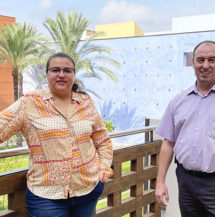
A team of researchers from the Instituto de Investigación para la Gestión Integrada de Zonas Costeras of the Universitat Politècnica de València (UPV) in Gandia – Arman Foroughi, José Miguel Jiménez and Jaime Lloret – has designed a mobile application that enables early detection of diseases and pests in orange trees.  Can you imagine being able to tell whether your orange trees are sick just by taking a photo? That is precisely what this research team at the Instituto de Investigación para la Gestión Integrada de Zonas Costeras on the Gandia Campus has achieved.  Researchers Arman Foroughi, José Miguel Jiménez...


Read more

New and Improved IGIC Website


Science and Society


Campus Gandia of the Universitat Politècnica de València (UPV) is excited to announce the launch of the newly redesigned and enhanced website for the Institute for Integrated Coastal Zone Management (IGIC) https://igic.webs.upv.es/en/. This new portal represents a major advancement in the commitment to sharing the research and innovations developed by the institute. The IGIC has become a leading authority in the research, study and management of coastal zones, tackling critical challenges such as climate change, marine biodiversity conservation, and the sustainability of these vital ecosystems. Currently, the IGIC comprises 62 members organized into 11 research groups across three key areas:...


Read more

Start of New Phase at IGIC


Others Science and Society


Jaime Lloret, the new director of the Research Institute for Integrated Coastal Zone Management (IGIC, for its Spanish initials) since January 2017, has presented the main lines of action for the Institute located on the campus of Gandia.


Read more

The IGIC Research Institute Makes of the Campus of Gandia an International Reference Point


Environmental Science


What is the IGIC? An important part of the research that takes place on the Campus Gandia occurs in the Research Institute for Integrated Coastal Zone Management (IGIC). Made up of 70 researchers from Campus Gandia, it was inaugurated in 2007 to actively promote and conduct scientific research of excellence in: Knowledge of the environment and ecosystems Development of ICT tools for monitoring and evaluation Environmental planning and natural resource management


Read more

The ThinkInAzul Comunitat Valenciana Programme Comes to an End


R&D&I


The ThinkInAzul Comunitat Valenciana programme concluded on 31 December, marking the end of three years of coordinated work in the field of marine sciences. This programme forms part of the Complementary R&D&I Plan in Marine Sciences ThinkInAzul, a joint initiative involving seven autonomous communities —Andalusia, Cantabria, Comunitat Valenciana, Galicia, Region of Murcia, Canary Islands and Balearic Islands— aimed at integrating, strengthening and highlighting marine research carried out across these territories. Over the past three years, ThinkInAzul has promoted the creation of a network of centres of excellence, fostering scientific cooperation to address key challenges such as sustainable aquaculture, new marine...


Read more

New Podcast Launch: Más Claro Agua (Crystal Clear)


Environmental Science


Despite their crucial role on Earth, we still know more about distant planets than we do about our own oceans. “Más Claro Agua” (Crystal Clear) is a podcast that dives deep beneath the surface to explore the ocean’s astonishing biodiversity and pressing environmental challenges—uncovering the secrets our seas still hold.  The podcast was launched by the Eucrante Association in collaboration with the Campus Gandia of the Universitat Politècnica de València. Its goal is to explore and answer questions about the marine ecosystem, from fishing methods and cephalopods to marine reptiles, oceanic Posidonia, and even the mysterious phenomenon of marine snow—among...


Read more

UPV Takes Part in Detecting the Highest- Energy Neutrino Ever Recorded


Technology


This discovery, published in the scientific journal Nature, unveils a new way to observe the Universe. This achievement is the result of the international scientific collaboration KM3NeT, which includes the IGIC Research Institute at Campus Gandia of the Universitat Politècnica de València, along with the Joint Unit with the Spanish Institute of Oceanography. Two years ago, the ARCA detector of the KM3NeT underwater neutrino telescope recorded an extraordinary deep-sea event linked to a neutrino with an estimated energy of approximately 220 PeV (220 × 10¹⁵ electron volts or 220,000 trillion electron volts). This event, named KM3-230213A, is the most energetic...


Read more

Innovative Smart System Boosts Efficiency in Marine Aquaculture


Technology


Projections estimate that aquaculture will yield 106 million tons of fish by 2030, highlighting the growing demand for efficient and sustainable practices. Emerging technologies provide valuable tools to enhance the management of marine aquaculture systems. In a recent study, researchers from Campus Gandia (UPV), led by Jaime Lloret and in collaboration with the Polytechnic University of Cartagena, explored the application of new technologies in aquaculture. They designed control systems and proposed an intelligent algorithm-based system aimed at enhancing the efficiency and sustainability of marine aquaculture systems. This system uses cost-effective sensors and sensor networks to collect data, allowing real-time monitoring...


Read more

World-Leading Scientists


Science and Society


The Universitat Politècnica de València (UPV) concluded 2024 with 107 of its researchers ranked among the world’s most influential, according to the latest “Ranking of the World Scientists: World’s Top 2% Scientists”” by Stanford University. This prestigious list, compiled in collaboration with Elsevier and based on Scopus data, identifies leading researchers across various fields of knowledge globally. The ranking comprises two distinct lists: one assessing entire scientific careers and another focusing solely on the past year. The career-long list features 217,097 individuals, while the single-year list includes 223,152.  Notably, 37 UPV scientists are recognized on both lists. The UPV scientists...


Read more