

Can a video recorded by teenagers help challenge sexist stereotypes? Can audiovisual media become a tool for promoting gender equality in the classroom? These are some of the questions that guided educoGEN, a research project led by Mònica Figueras Maz of Pompeu Fabra University and Ariadna Fernández Planells, a professor at the Gandia Campus (UPV), which has just concluded after four years of work.
The project stems from the convergence of two lines of research that our team had been developing separately for years. On the one hand, we were working on participatory audiovisual methodologies, exploring how content creation fosters expression, critical reflection, and youth empowerment. On the other, we were conducting research on gender, youth, and social inequalities. educoGEN arose precisely from the desire to unite both areas and analyze whether audiovisual media could become a useful tool for reversing gender inequalities among teenagers.
The idea took shape from the experience gained in the European project SMOOTH, which focuses on so-called educational commons. This approach understands education as a shared, horizontal, and participatory process. With educoGEN, we wanted to take it a step further by incorporating a gender perspective and applying these methodologies to one of the most urgent social challenges: building egalitarian relationships among young people.
To this end, we worked with students and teachers from eight schools in Barcelona, Madrid, Valencia, and Bilbao. The research combined questionnaires, interviews, focus groups, participant observation, and audiovisual workshops. In total, nearly a thousand students and more than a hundred teachers participated.
The initial results revealed a complex reality. Although most teenagers reject the most explicit forms of sexism, discourses that minimize gender inequality, question feminism, or reproduce seemingly more subtle stereotypes persist. We also detected a significant influence of social media and digital environments on the construction of perceptions about relationships, masculinity, and femininity.
Faced with this situation, educoGEN opted for a different methodology. Instead of positioning young people as passive recipients of messages, it made them the protagonists of the process. Participants analyzed audiovisual representations, debated gender inequalities present in their environment, and created their own audiovisual pieces to express their reflections and proposals for change.
This process fostered spaces for dialogue that are rarely found in more traditional formats. The teenagers didn’t just talk about equality; they constructed their own narratives about it. Audiovisual media thus became a tool for reflection, expression, and participation.
One of the project’s most significant findings has been that young people are demanding methodologies that are closer to their ways of communicating and relating to one another. They often express fatigue with activities perceived as overly theoretical or repetitive, while they positively value proposals that allow them to actively participate and contribute their own perspectives.
Beyond academic results, educoGEN has had a clear commitment to social transfer. Among its main products is an open teaching kit, divided into four volumes, which offers resources, activities, and recommendations so that any educational center can adapt and apply the methodology. The goal is for the learning generated during the research to not be limited to university settings, but to reach teachers, administrations, and organizations working with young people. In addition, we have also created two sets of guidelines, one aimed at teachers and school leadership teams, and the other aimed at journalists.
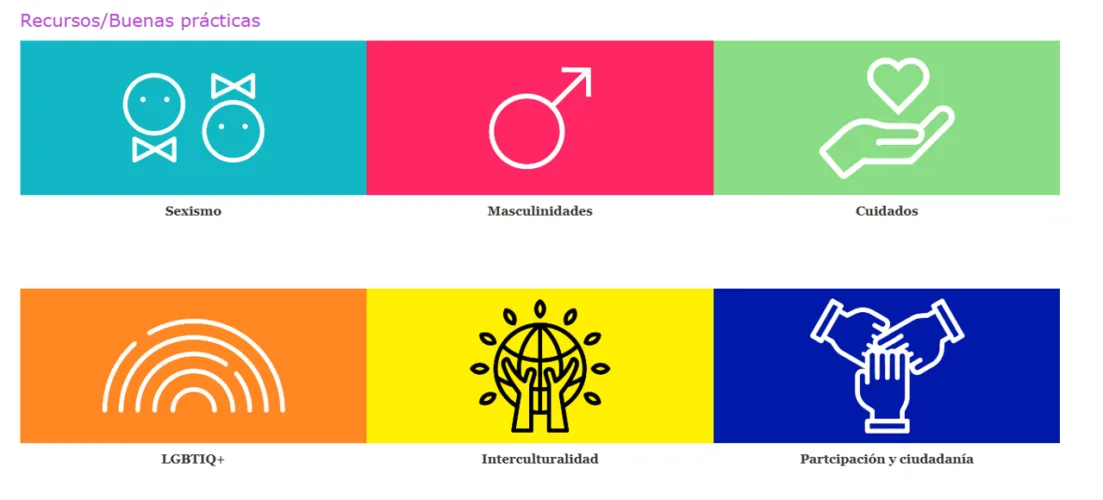
We have also created two repositories: one that collects research papers on participatory methodology and another on best practices. Many of the initiatives in these repositories have been identified by our researchers and by members of the network we are building: the educoGEN network is an open space aimed at academic and non-academic entities working in the fields of audiovisual media, media literacy, media education, gender perspectives, and participatory methodologies, especially—but not exclusively—with young people. Finally, it is worth noting that, within the more academic sphere, we have published all the results obtained in two reports, an initial and a final report, available on our website.
In a context marked by persistent gender inequalities and the emergence of new antifeminist discourses in digital environments, educoGEN demonstrates that it is possible to work towards equality through innovative and participatory approaches. The project’s main lesson is simple yet powerful: adolescents are not merely the recipients of educational policies on equality. They are fundamental agents in building it.
Because equality is not taught solely through a presentation or a manual. It is also built by listening to young people, giving them tools to express themselves, and trusting in their capacity to imagine fairer futures.
The educoGEN project (Participatory Audiovisual Methodology in Secondary Education to Reverse Gender Inequalities) is funded by the Spanish National R&D&I Plan of the Ministry of Science and Innovation, under its 2021 Knowledge Generation Projects call (PID2021-123583OB-I00).
Ariadna Fernández Planells, Professor and Researcher at the Gandia Campus (UPV)