

A study led by the Gandia Campus of the Universitat Politècnica de València analysed more than 97,000 bird-ringing records collected over 25 years and revealed stability in wintering bird communities.
Wintering bird communities in eastern Spain have remained stable over recent decades. This is the conclusion of a study led by bird expert Pau Lucio Puig, which shows that geography and local habitat characteristics have a greater influence on the composition of bird communities than recent climate change.
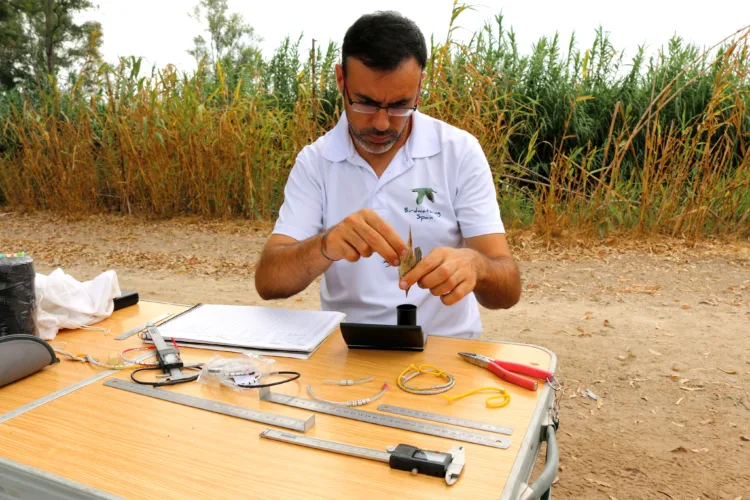
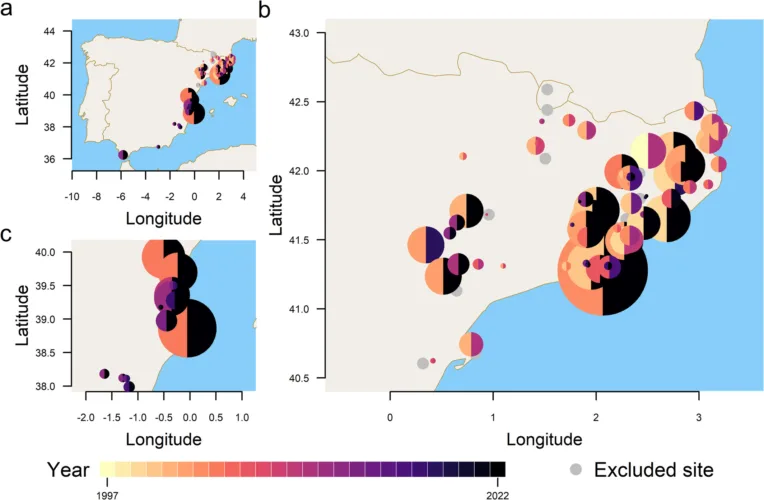
The research, published in the scientific journal Journal of Biogeography, analysed more than 97,000 bird ringing records collected over 25 years at monitoring stations in the eastern Iberian Peninsula. The results indicate that geographical and local environmental factors, such as altitude, habitat type, and sampling effort, mainly determined differences among bird communities. By contrast, climate variables had less influence than expected.
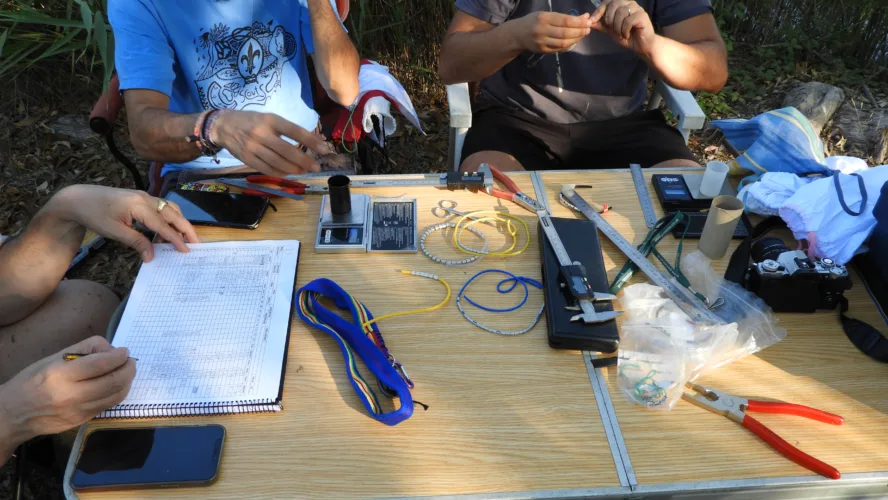
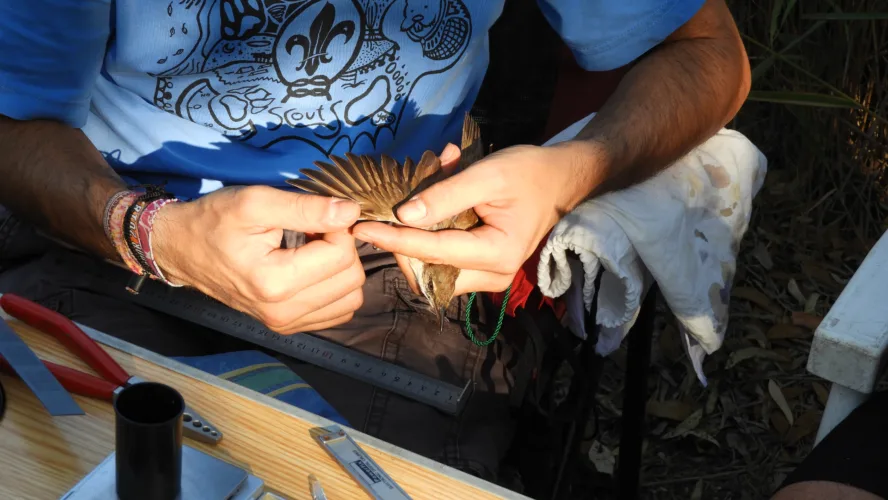
The study is the result of collaboration between the Gandia Campus (UPV), the Universitat de València, Fundación Migres, the Asociación de Naturalistas del Sureste (ANSE), SEO BirdLife Comunitat Valenciana and the Lorenzo García ringing station.
A total of 83 bird species were analysed, and only 6 showed significant temporal changes. In most cases, the observed patterns were related to the sampling stations’ geographical locations or to interactions between spatial and temporal factors. These results suggest that there is no uniform trend across the whole region; rather, bird community dynamics depend to a large extent on the local characteristics of each area.
More species in winter
Despite the stability in the composition of these communities, a significant increase in species richness was detected over the study period. This increase could be explained by several simultaneous processes, including the expansion of some resident species, the arrival and establishment of non-native species such as the common waxbill (Estrilda astrild) and the red-billed leiothrix (Leiothrix lutea), and the increase in wintering individuals of partially migratory species, such as the Eurasian scops owl (Otus scops).

A possible effect of geographical location and the predominance of generalist species
Although maximum temperatures showed a slight upward trend over the study period, this increase was not statistically significant in the models analysed. According to the research team, the relative stability of wintering bird communities in the Iberian Peninsula could be linked to its intermediate latitude, which may buffer the direct influence of climate variability compared with that observed in more northern or tropical regions. In addition, this relative resilience may also reflect the predominance of widely distributed generalist species, which tend to tolerate environmental fluctuations better and may mask the first signs of climate-induced changes in communities.
Finally, the team underlines the need to design conservation strategies that are adapted to spatial variability and the specific local conditions of each area, with particular emphasis on maintaining habitat diversity and protecting areas that include representative altitudinal and climatic gradients.
More information:
Lucio-Puig, P., Garófano-Gómez, V., Morell-Monzó, S., Monrós, J.S., Onrubia, A., García-Castellanos, F.A., Ferrís, D., Paracuellos, M. and Muñoz-Mas, R. (2025), Geography and Site-Specific Factors, Rather Than Recent Climate, Dominated Spanish Wintering Bird Communities. Journal of Biogeography, 52: e70097. https://doi.org/10.1111/jbi.70097
* Cover photo: Eurasian scops owl (Author: Carlos Mompó).