

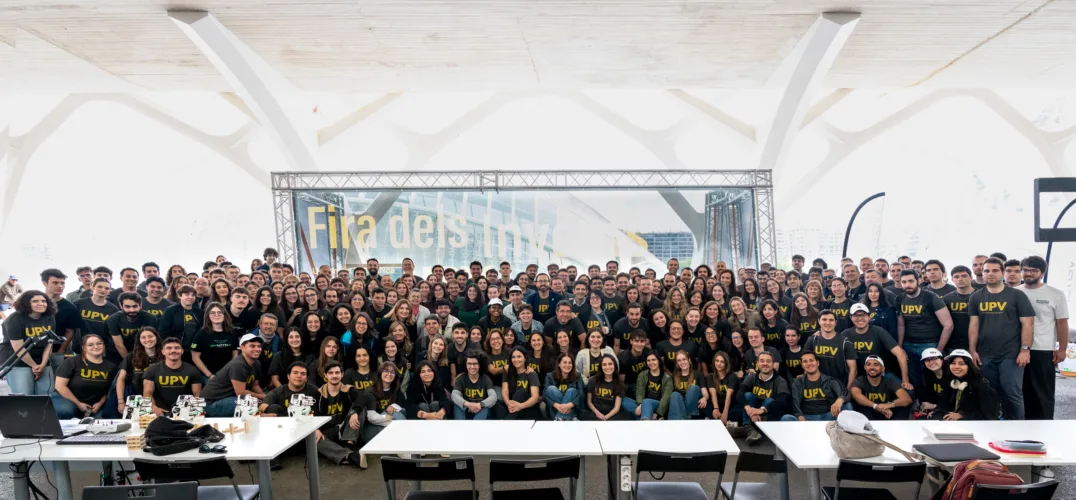
The UPV Invents Fair has established itself as a major showcase of science, technology, and innovation open to the public. In this third edition, the Gandia Campus (UPV) has played a prominent role thanks to the involvement of its students and technical, teaching, and research staff in a range of science communication and technological development activities and stands.
Hundreds of people visited the third edition of the UPV Invents Fair, held this year on the Arbotantes Promenade at the City of Arts and Sciences. The aim of the initiative is to spark scientific curiosity and bring the university’s advances closer to society.
The fair brought together projects from across all fields of knowledge present at UPV: biomedical engineering, agriculture, construction, telecommunications, and artistic creation, among others. All of this was presented through live demonstrations, interactive workshops, and experiments designed to connect science with everyday life.
Science you can see… and touch
Students and staff from the Gandia Campus of UPV actively took part in the fair, showing how research and innovation can help improve people’s lives. The proposals covered areas such as robotics, artificial intelligence, and technology development.
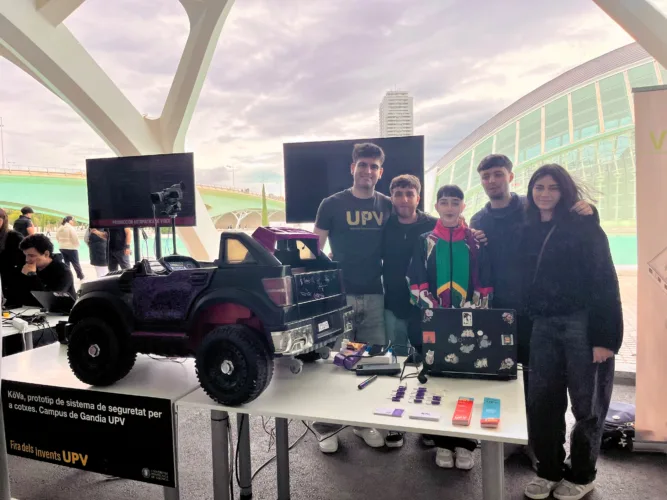
KöVa, an intelligent system to improve vehicle safety
KöVa is a system developed by students from the Degree in Interactive Technologies that allows users to “monitor, locate, and manage a vehicle remotely through a mobile application connected to an IoT prototype installed in the car.” This tool enhances safety and facilitates vehicle control.
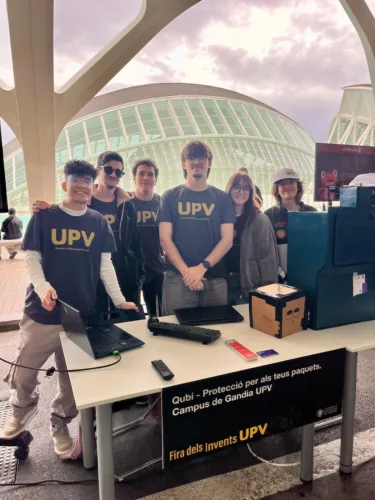
Qubi, protection for your packages
Qubi is a mailbox made of cardboard and equipped with sensors, designed to securely receive packages even when the user is not at home. The system can be easily managed from a mobile phone.
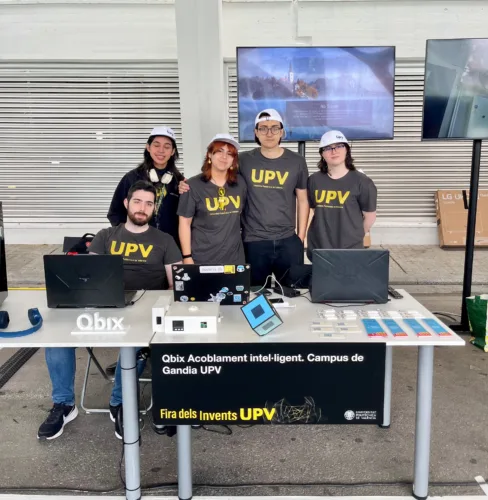
Qbix, a refrigerator transformed into a smart device
Another project developed by students from the Degree in Interactive Technologies is Qbix, a system capable of turning any refrigerator into a smart device. The application automatically detects items entering and leaving the fridge, keeps an updated inventory, and alerts users about expired or spoiled products. In addition, it allows activation of disinfection or ripening modes using UV light, creates shopping lists, and even incorporates a culinary chatbot capable of suggesting personalized recipes.
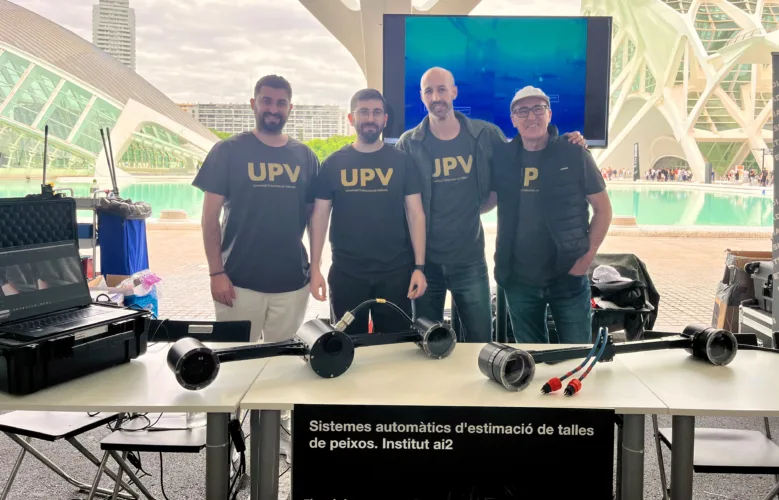
At the stand on automatic fish size estimation systems, the research institutes ai2 and IGIC showcased underwater stereoscopic cameras designed to record bluefin tuna, sea bream, and sea bass. Thanks to dedicated software, fish size can be estimated. This technological advancement improves aquaculture management. Sergio Morell, an expert in underwater acoustics from the Gandia Campus, participated in the project.
The participation of the Gandia Campus also included outreach workshops. In the “Science and luthiery” workshop, the public could observe in a very visual way how the top plate of a violin vibrates, connecting science with instrument-making. When the plate vibrates and sand is placed on top, striking patterns called Chladni figures appear, showing how vibrations travel. In this way, we can “see sound” with our eyes. Luthiers use these shapes to adjust the wood and improve the instrument’s sound. The workshop was led by Nàdia Mahlo, Pilar Sánchez, and Rubén Picó.
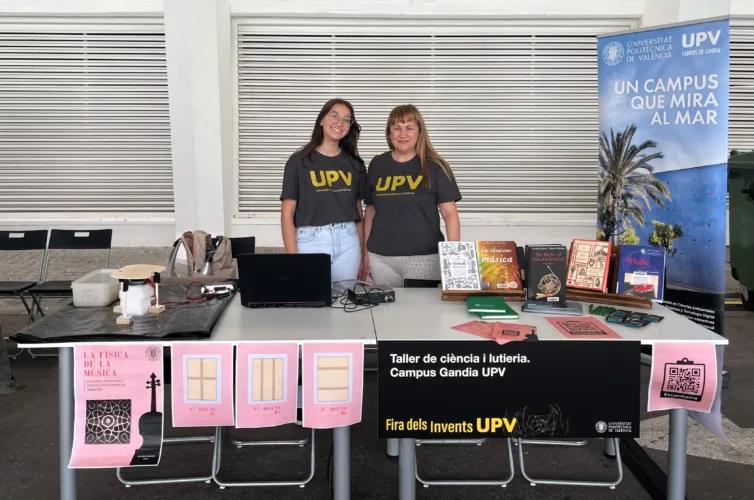
On the other hand, the workshop “Who is lying to me, why are they lying, and what can I do?” enabled participants to identify false information and apply basic verification strategies against misinformation. Attendees learned to detect misleading content and received practical advice on navigating the digital environment critically and avoiding falling for fake news. The workshop was led by Germán Llorca and Nàdia Alonso, researchers specializing in audiovisual communicatio
Once again, the UPV Invents Fair has made it possible to share the scientific and technological work developed at the university with people of all ages and to inspire new vocations.
The UPV Invents Fair is supported by the Spanish Foundation for Science and Technology (FECYT) of the Ministry of Science, Innovation and Universities. The Generalitat Valenciana and the City of Arts and Sciences of Valencia also collaborate in the initiative.
More information is available at this link.