
Healthy eating, appropriate clothing, limiting screen time, protection from the sun… As parents, we’re always worried about our children. However, there are still invisible enemies, like noise, that we aren’t as aware of. This means we don’t think about the consequences. But there are consequences.
Recently, the European Environment Agency (EEA) published a report warning that more than 500,000 children in Europe have reading difficulties due to transportation noise (cars, trains, and planes) and that around 60,000 exhibit behavioral problems related to this continuous exposure to noise.
In Spain, there are about 80,000 cases of reading difficulties and 9,000 of behavioral issues, primarily in urban areas and mostly due to road traffic. The actual numbers are higher, as only a portion of Europe’s infrastructure has been studied.
Learning to read amid noise… and also how to behave
Why does environmental noise affect reading ability? Reading is an activity that requires maintaining focus, understanding, remembering, and staying on track. If the noise is constant, it causes the child to get distracted and have to start over. This also puts extra strain on their brain. When it comes to young children, they need to distinguish sounds clearly in order to build their vocabulary and comprehension.
But how noise affects children goes beyond their learning, as the European study has shown. In what ways is it affecting children’s behavior? We’re not saying they’re “rude.” It’s about the body’s response to a hostile environment. A noisy environment causes restlessness, difficulty sitting still, and keeps the body in a constant state of alert, making it harder to follow rules or concentrate. It must be clear that the child is not the problem; it is the environment and the body’s natural response.
In fact, there are differences between what happens in cities and in rural areas. In cities, according to the SICA Report or the Exposed Population Report, between 40% and 60% of schools are located near highways, train tracks, or flight paths. Classrooms with windows closed all day, teachers who have to raise their voices, children distracted by every passing truck or motorcycle, and playgrounds surrounded by traffic noise are part of daily life. In small towns or less-trafficked areas, exposure is lower. There are more quiet spaces, and therefore the overall impact is less.
Schools: What Is the Noise Limit?
As early as the 1980s, the World Health Organization (WHO) began to recognize noise as a health risk, particularly for vulnerable populations. In its first guidelines on community noise, it made clear that children are a group particularly vulnerable to noise, which can affect speech comprehension, learning, and academic performance.
It was in the 1990s that the WHO conducted studies in school settings located near airports and major transportation infrastructure and found its first evidence: children studying in noisy environments learn more slowly.
Later, EU-funded studies demonstrated that higher noise levels lead to poorer reading skills. Furthermore, it was shown that noise affects children’s psychological well-being. We’re talking about loss of attention, lack of comprehension, and behavioral problems.
In some cases, noise levels in schools reach 85 dB(A). The WHO classifies this level as dangerous. So much so that in a workplace, to protect workers’ health, they should wear hearing protection. Now, could we imagine our children in class wearing earplugs for their health?

What can be done?
The EEA report also outlines actions to be taken, since this problem, unlike others, is indeed preventable. Measures can be implemented in the surrounding environment: reducing traffic speeds near schools, installing sound barriers or planting vegetation, improving road surfaces, or rerouting heavily trafficked roads away from schools.
Another option involves improvements within schools: increasing sound insulation, relocating classrooms in the most affected areas, shielding schoolyards, or incorporating acoustic standards into renovations and new school designs.
Associations such as School Parents Associations are also key. Families must bring this issue to the forefront and make it clear that the health and education of our children are at stake.
Awareness is also important. In fact, the Spanish Acoustics Society (SEA) is running a campaign around International Noise Awareness Day, which this year falls on April 29. The slogan “Live without noise, live better” focuses on protecting children, their learning, their emotional well-being, and their future opportunities.
In my case, I’ve known for a long time that I’m “a small-town person,” and I hear the swallows and birds chirping when I take the kids to school.
Article published in The Conversation: https://theconversation.com/no-puedo-con-tanto-ruido-un-enemigo-invisible-para-la-infancia-281366
Author:
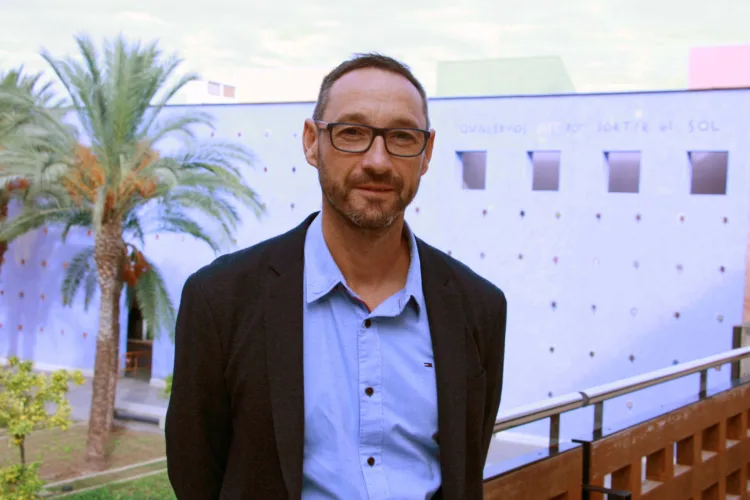
Jesús Alba Fernández, professor and researcher at the Gandia Campus of the Universitat Politècnica de València