

Biofloc technology is presented as an innovative solution to reduce environmental impact, as it allows carbon and nitrogen waste to be transformed into food sources for cultured organisms. At the same time, it contributes to improving animal welfare and reducing water consumption.
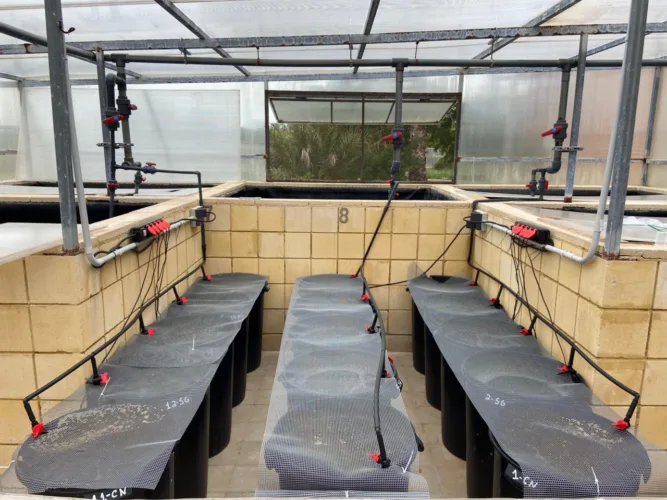
This system is based on the growth of microbial communities in the culture water, capable of converting nitrogenous waste produced by fish and shrimp into usable biomass. In this way, in addition to reducing the need for water exchange, Biofloc provides additional protein, improving sustainability and production efficiency. Furthermore, these microorganisms can colonize the intestinal tract of the animals, acting as probiotics and prebiotics and enhancing their health.
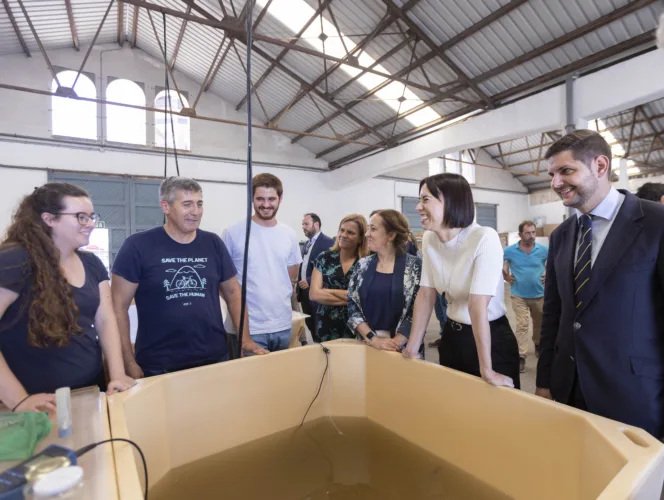
For the past five years, the Aquaculture and Biodiversity (GAB) teams at the Vera Campus of the Universitat Politècnica de València (UPV) and the Gandia Campus (UPV) have been researching the production of aquaculture species using Biofloc technology, achieving significant results that point toward sustainable and zero-waste aquaculture.
After more than ten research projects developed between the Gandia and Vera campuses of the UPV to study this technology and its possible implementation in Europe, the national project Zerofloc (PID2023-149570OB-I00), led by David Sánchez and Ana Tomás, is currently underway. This project aims to analyze the use of multitrophic systems for the production of organisms from different trophic levels. This strategy allows the recycling of waste from one species to feed another, increasing sustainability, reducing environmental impact, and diversifying the species produced.
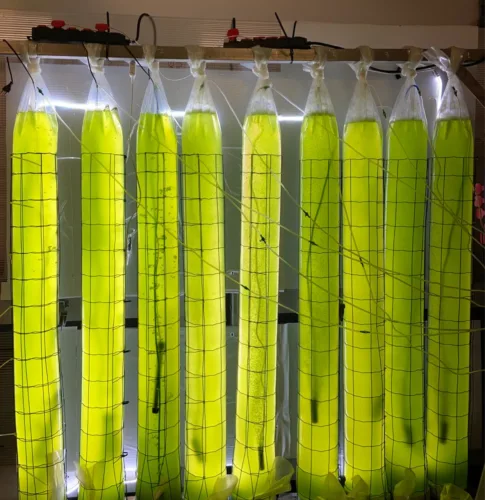
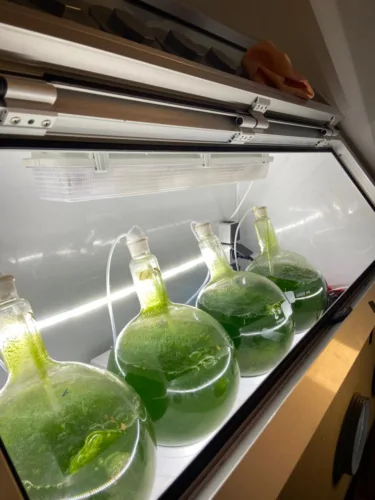
Currently, under the co-supervision of Miguel Rodilla, three experiments associated with this project are being carried out at the Gandia Campus. The first focuses on the study of a Biofloc system combining shrimp (Litopenaeus vannamei) and mullet (Mugil cephalus), with the addition of microalgae (Chlorella vulgaris), with the aim of evaluating their immunological effects on both fish and shrimp.
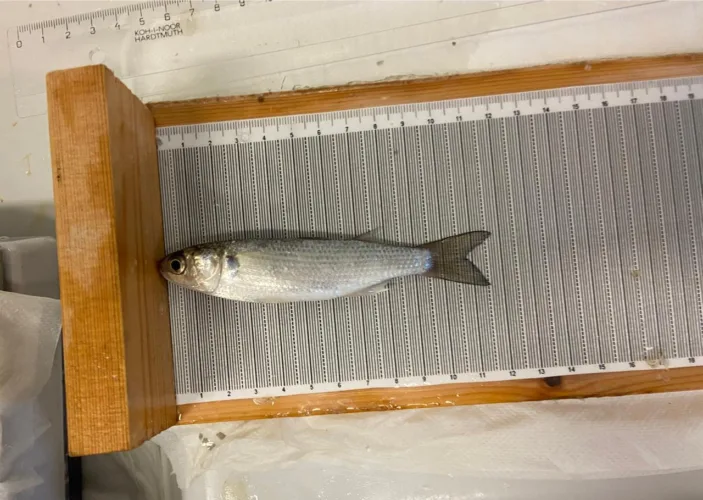
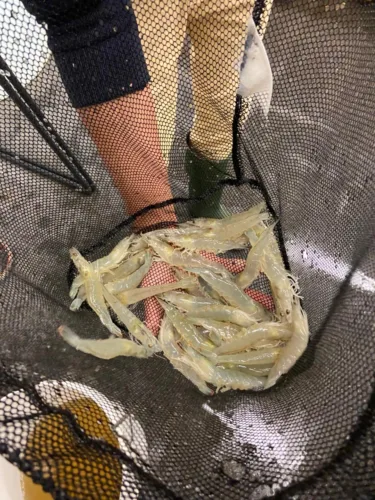
On the other hand, a decoupled integrated system using the microalga Chlorella vulgaris is being evaluated, comparing its bioremediation capacity and production performance with conventional shrimp farming systems.
It is worth noting that in 2025, funding was awarded under Horizon Europe, within the Marie Skłodowska-Curie Actions – Doctoral Networks programme, for the SwitchFloc project. This initiative brings together nine public and private organizations to train 11 doctoral candidates in the study and implementation of Biofloc technology in Europe. In this context, UPV acts as the leading institution of the consortium, with David Sánchez, a member of the Aquaculture and Biodiversity group at UPV, serving as the project coordinator.
The teams at the Vera and Gandia campuses will work over the next three years on optimizing shrimp diets, including the replacement of fishmeal with alternative protein sources, with the aim of reducing demand and improving sustainability. Likewise, the inclusion of bioactive compounds and the development of more efficient feeding strategies will be studied to enhance production.
In addition, a line of research focused on reducing the carbon footprint through Biofloc technology will be carried out, by means of water reuse and waste recycling. This research will assess the environmental impact of the system, including processes such as denitrification and the use of Biofloc waste as feed for other species, in order to demonstrate the long-term sustainability of this technology.
Finally, a grant has recently been awarded by the Generalitat Valenciana under the Santiago Grisolía programme (CIGRIS/2026/004). Under the supervision of Silvia Martínez, this will enable the development of a doctoral thesis aimed at continuing work toward a more sustainable future for aquaculture.