

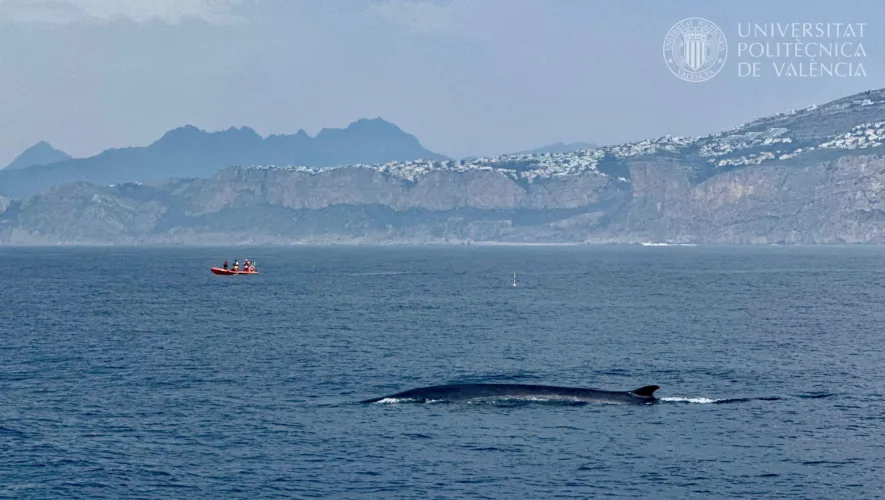
The fin whale (Balaenoptera physalus), the second largest animal on the planet and the only baleen whale regularly present in the Mediterranean, is listed as “Endangered” by the International Union for Conservation of Nature (IUCN) in this region. Despite its ecological importance, there are significant gaps in our knowledge about its distribution in Spanish waters during the autumn and winter months, a key period for its reproduction.
With the aim of improving scientific knowledge and supporting the management and conservation of this emblematic species, The Universitat Politècnica de València (UPV) and the University of Seville have launched the MYSTICMED project, which focuses its research on three strategic areas: the southern part of the Balearic-Levantine demarcation, the Alboran Sea, and the Atlantic waters off Galicia. These areas represent potentially critical zones for the fin whale, but are still understudied during the non-summer seasons. The project is led by researcher Eduardo Belda, an expert from the Gandia Campus (UPV) in satellite monitoring of marine species.
The project will combine advanced satellite tracking techniques, individual photo-identification, and ecological modeling, allowing for a more precise understanding of the species’ spatial patterns and their relationship with environmental variables. It will also analyze the degree of overlap with marine protected areas and human-caused threats, such as heavy maritime traffic and the effects of climate change on the marine environment.

As an innovative element, MYSTICMED will implement a pilot automated acoustic detection system designed to identify the presence of fin whales in real time. This system will enable the development of early warnings to reduce the risk of collisions with vessels, one of the main threats to the species.
“The project’s results will allow us to identify critical areas for conservation, assess how climate change may alter the distribution of the fin whale, and generate key information applicable to marine management, spatial planning, and conservation strategies. In this way, MYSTICMED will contribute directly to the protection of a keystone species for marine ecosystems and to fulfilling marine biodiversity conservation commitments,” conclude the UPV researchers, Eduardo Belda (Gandia Campus-UPV) and Víctor Gallego (ICTA Research Institute – UPV), and José Carlos Garcia Gómez and Cesar Megina from the University of Seville.
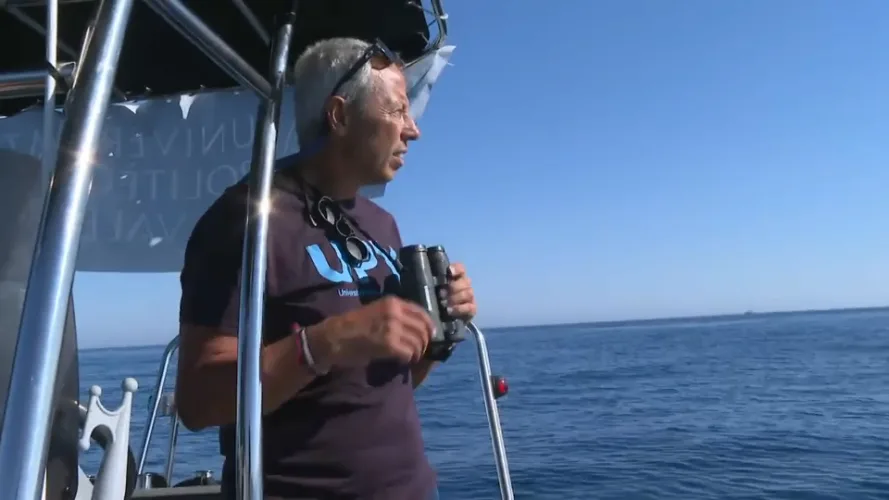
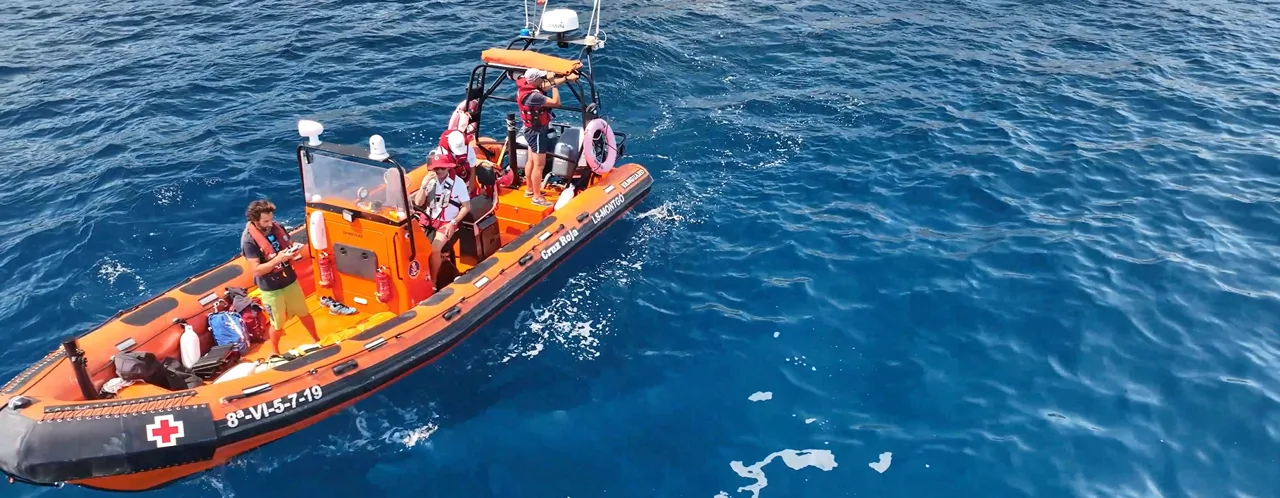
The first trips to sea to begin sampling and monitoring the fin whale began at the end of May off the coast of Dénia (Alicante) and the Strait of Gibraltar, and will continue until mid-July.
The MYSTICMED project is supported by the Biodiversity Foundation of the Ministry for Ecological Transition and the Demographic Challenge (MITECO), through co-financing from the European Regional Development Fund (ERDF).
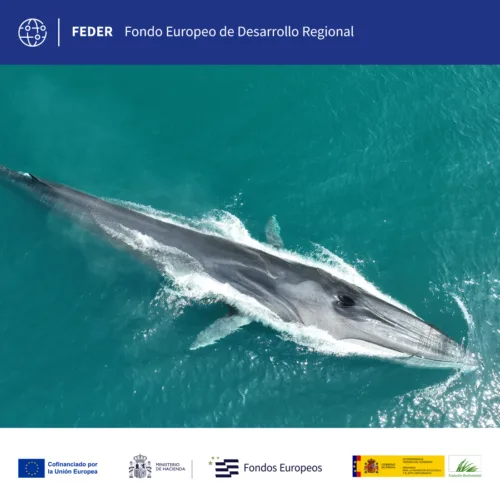
Photos obtained with prior authorization from MITECO (SGBTM/BDM/AUTSPP/32/2025)